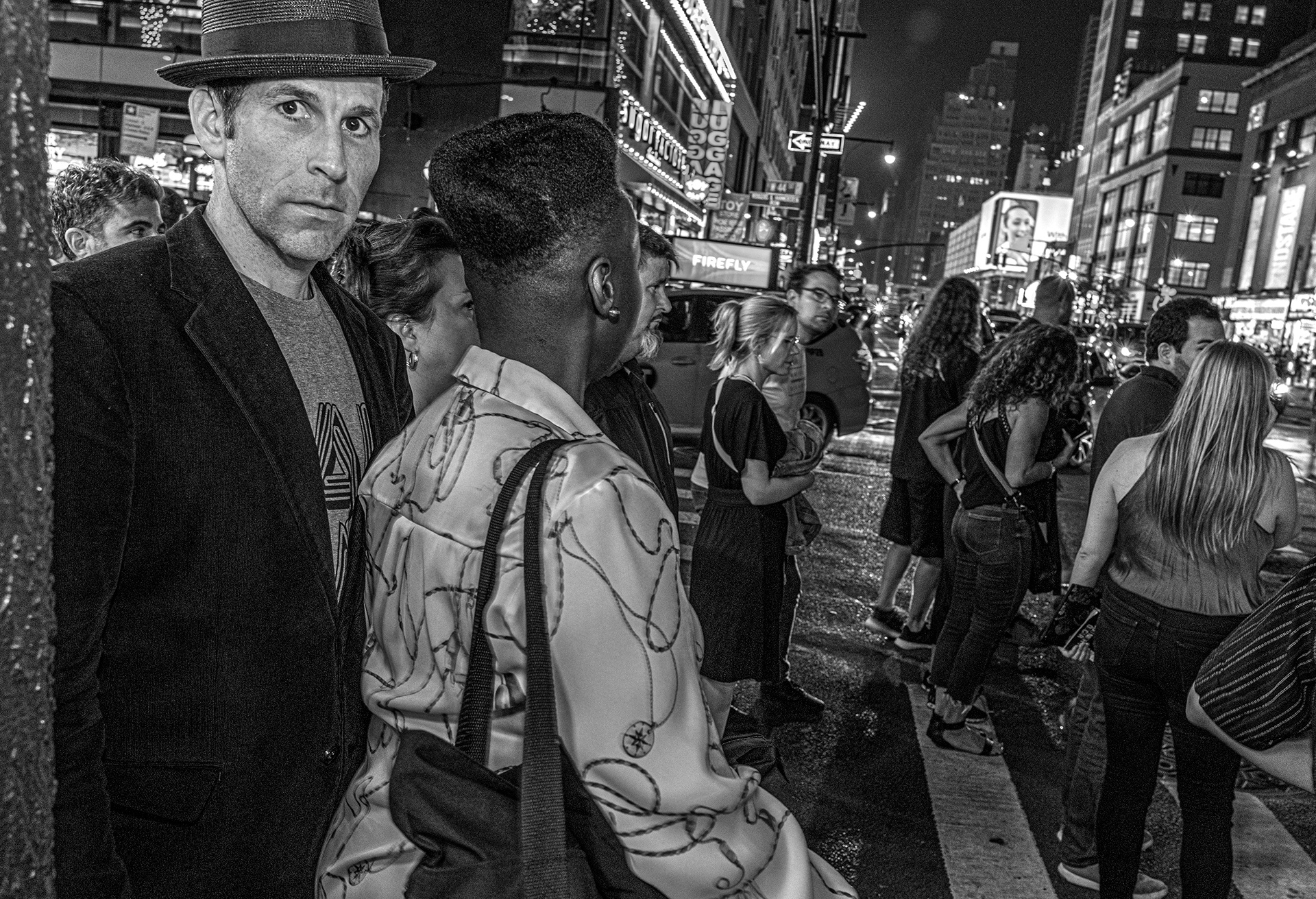
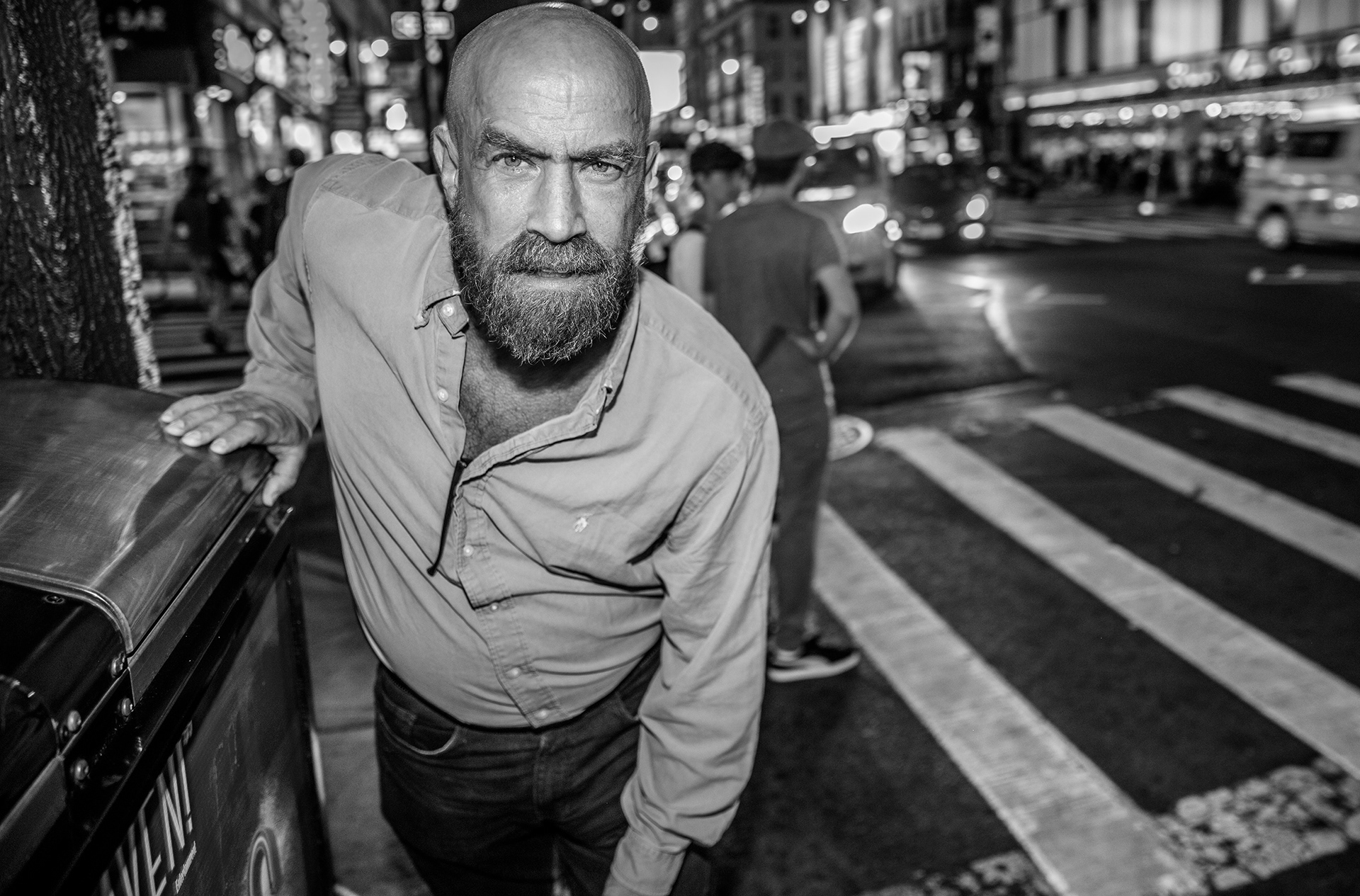
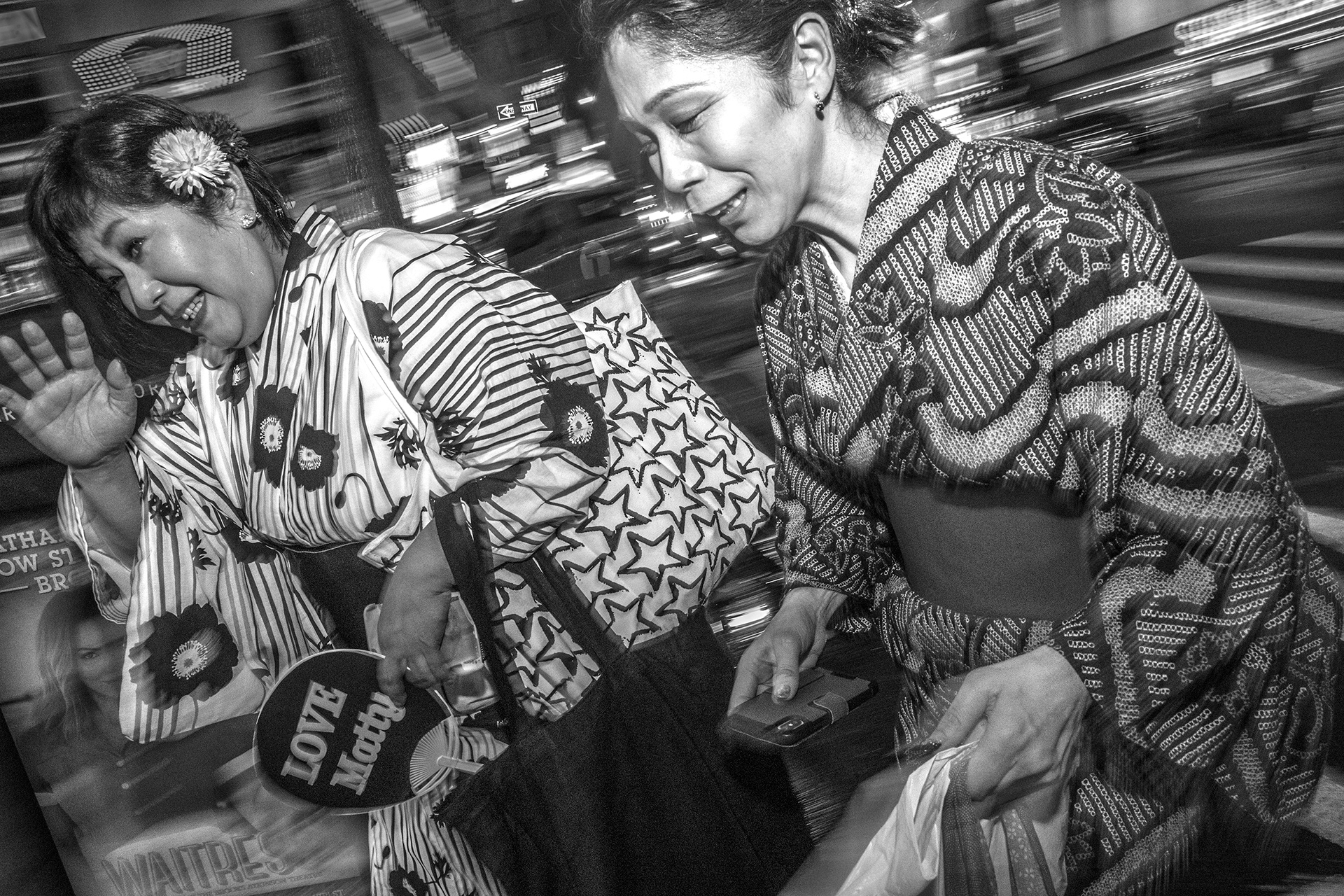
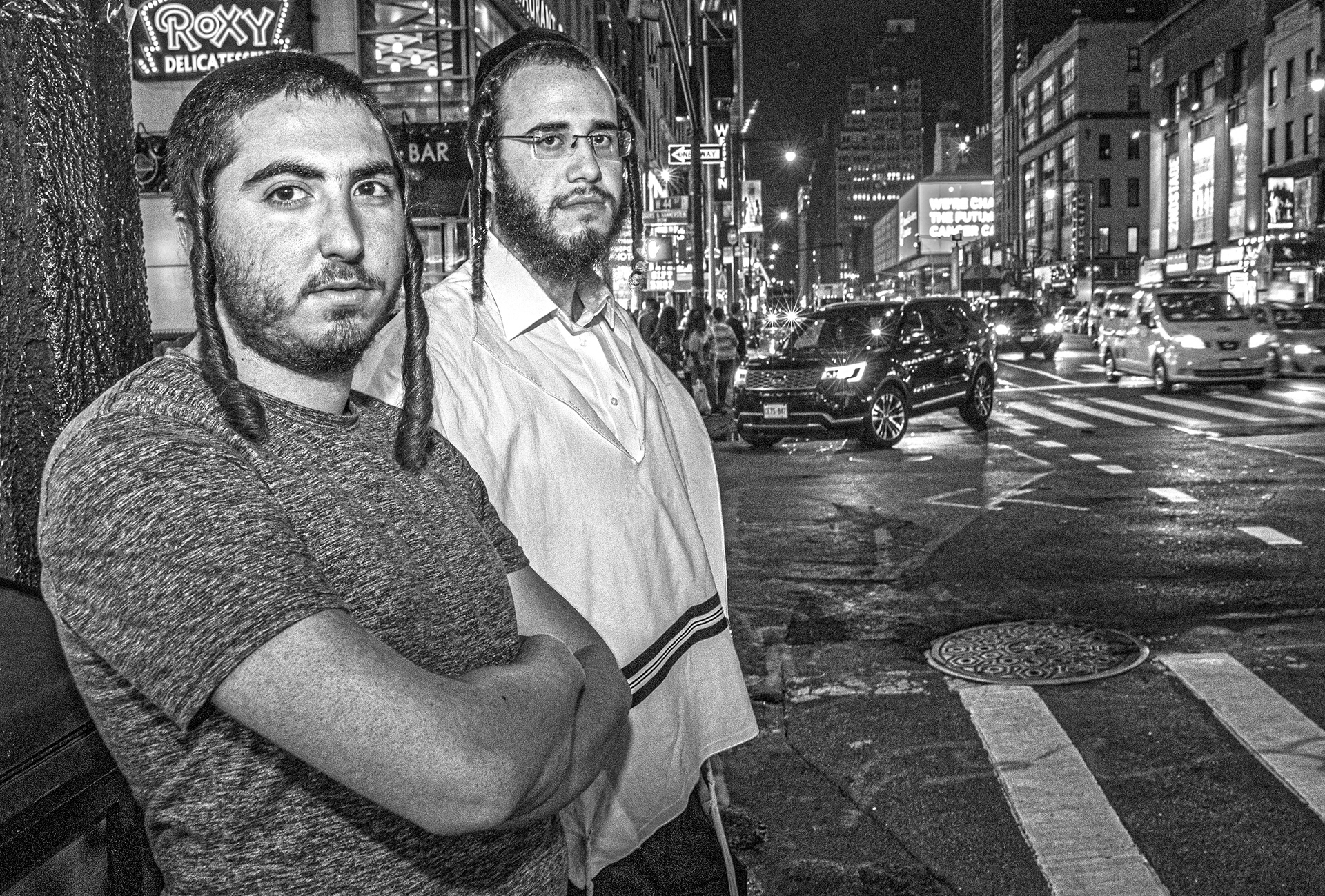
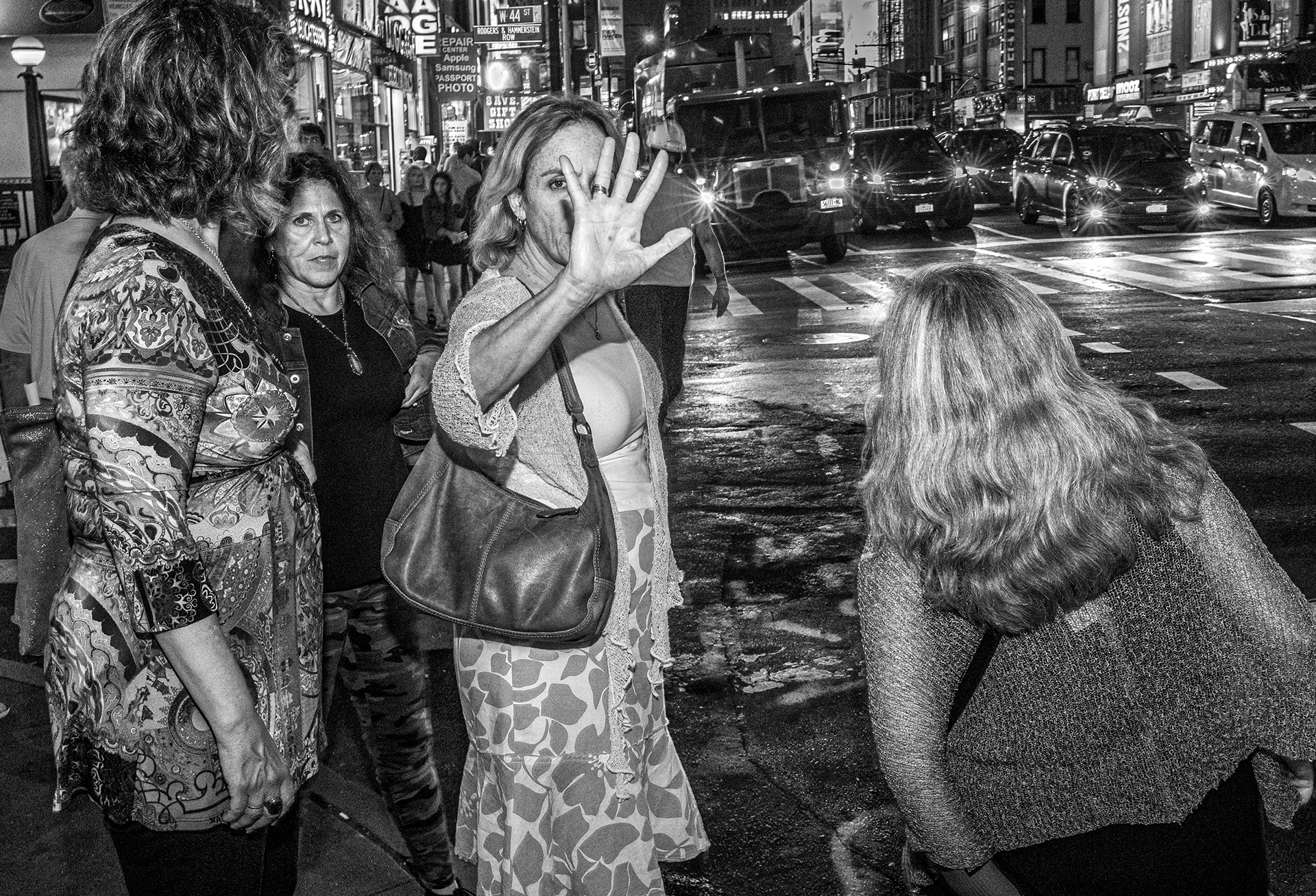
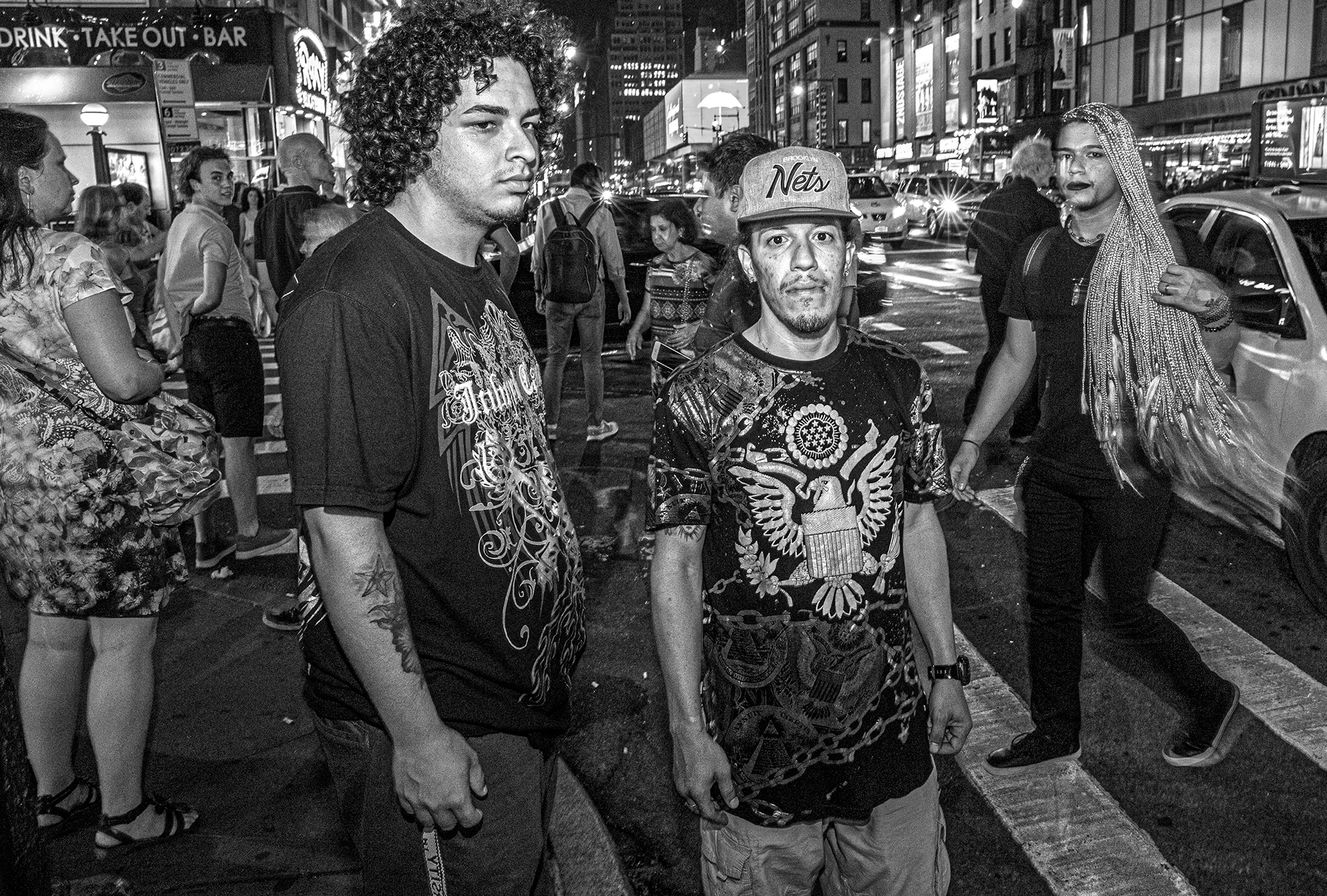
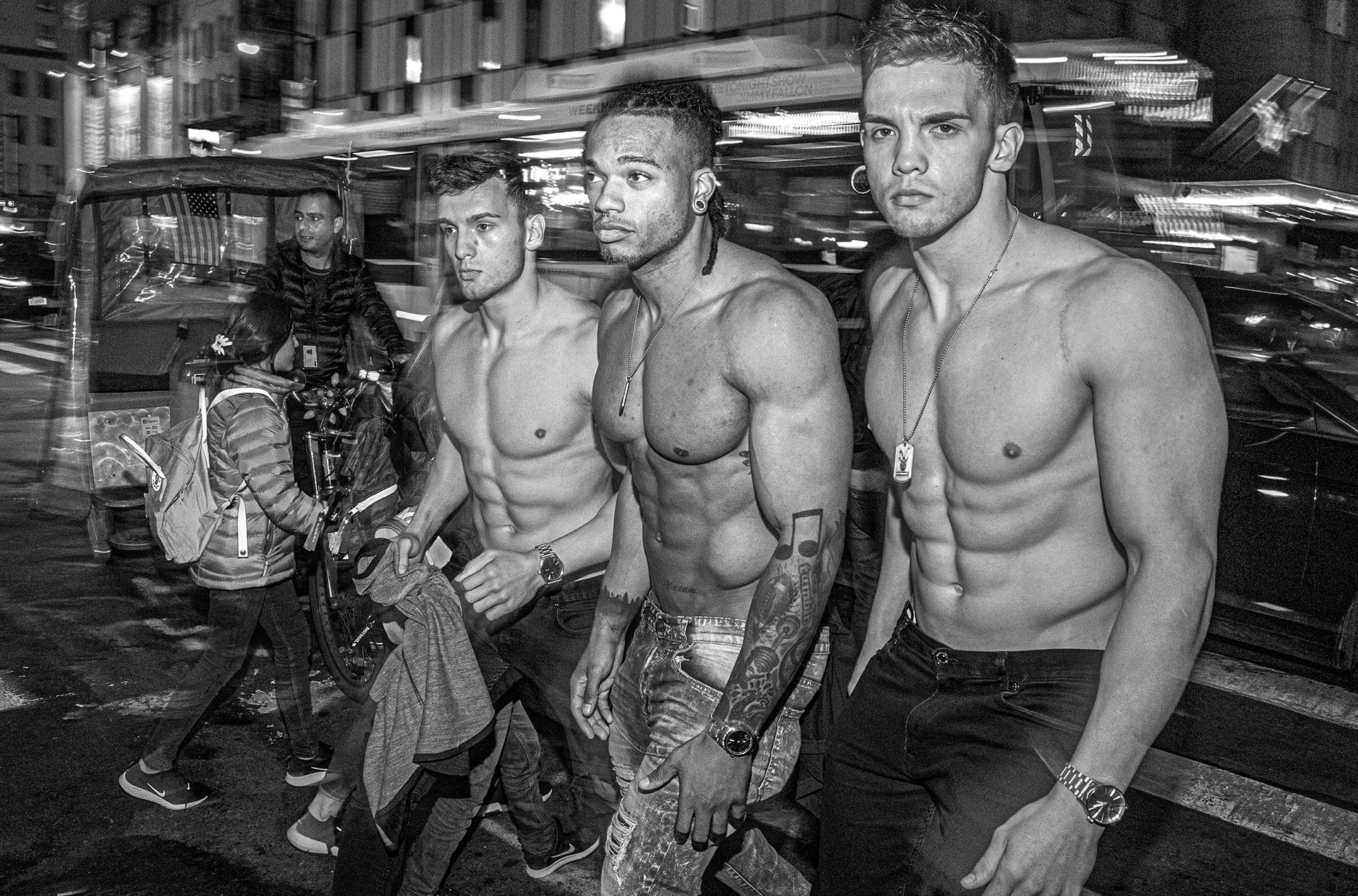
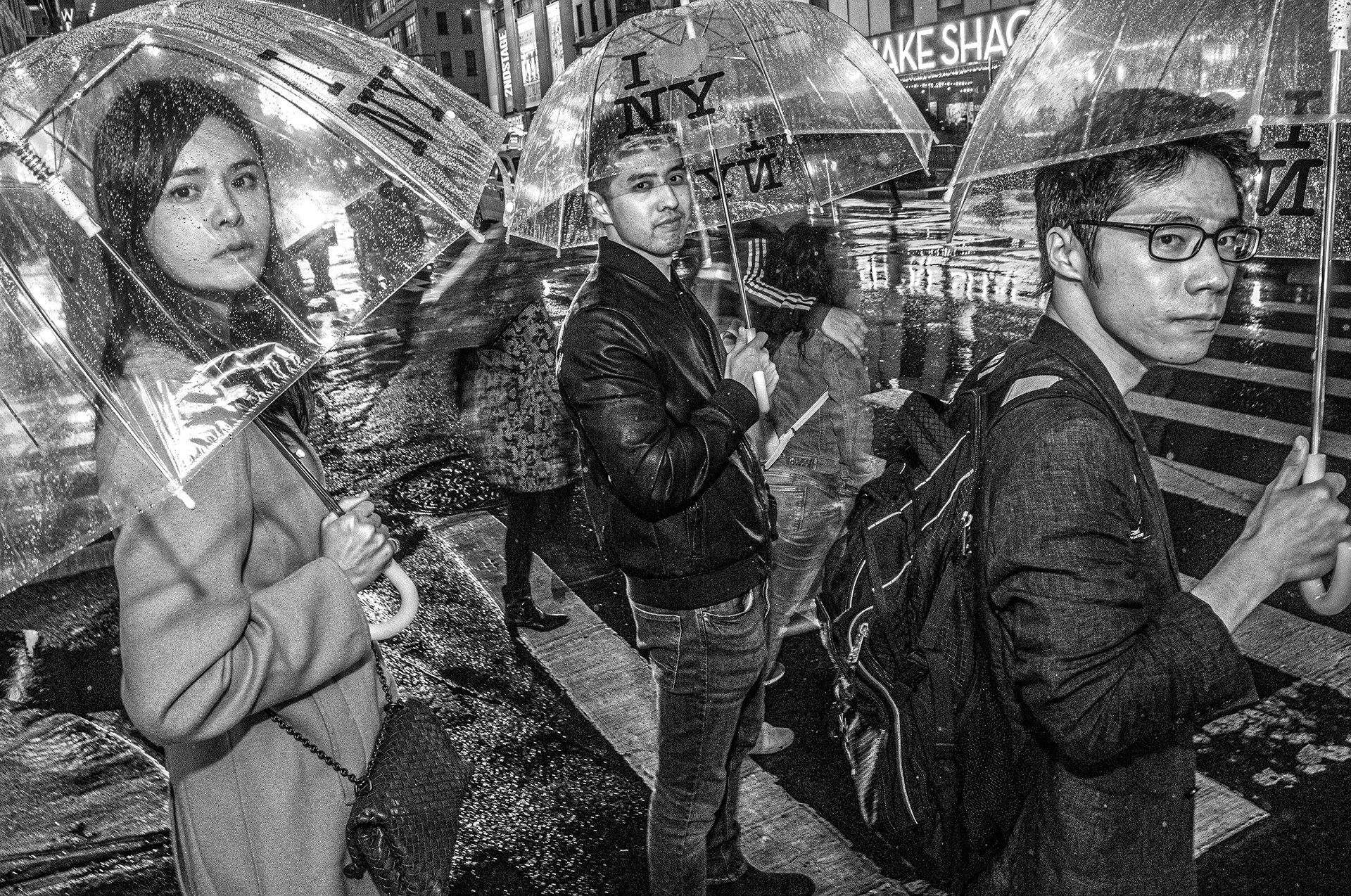
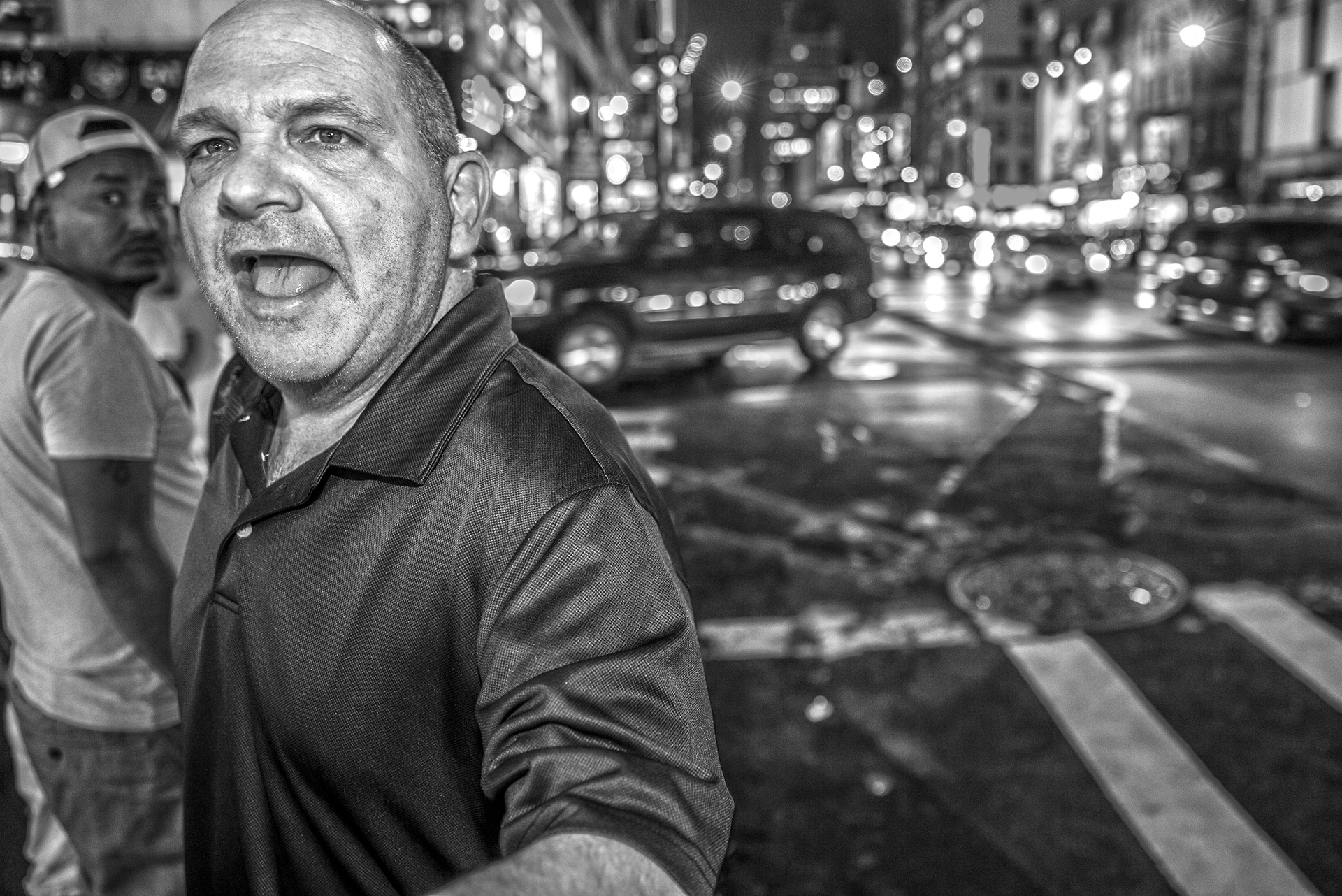
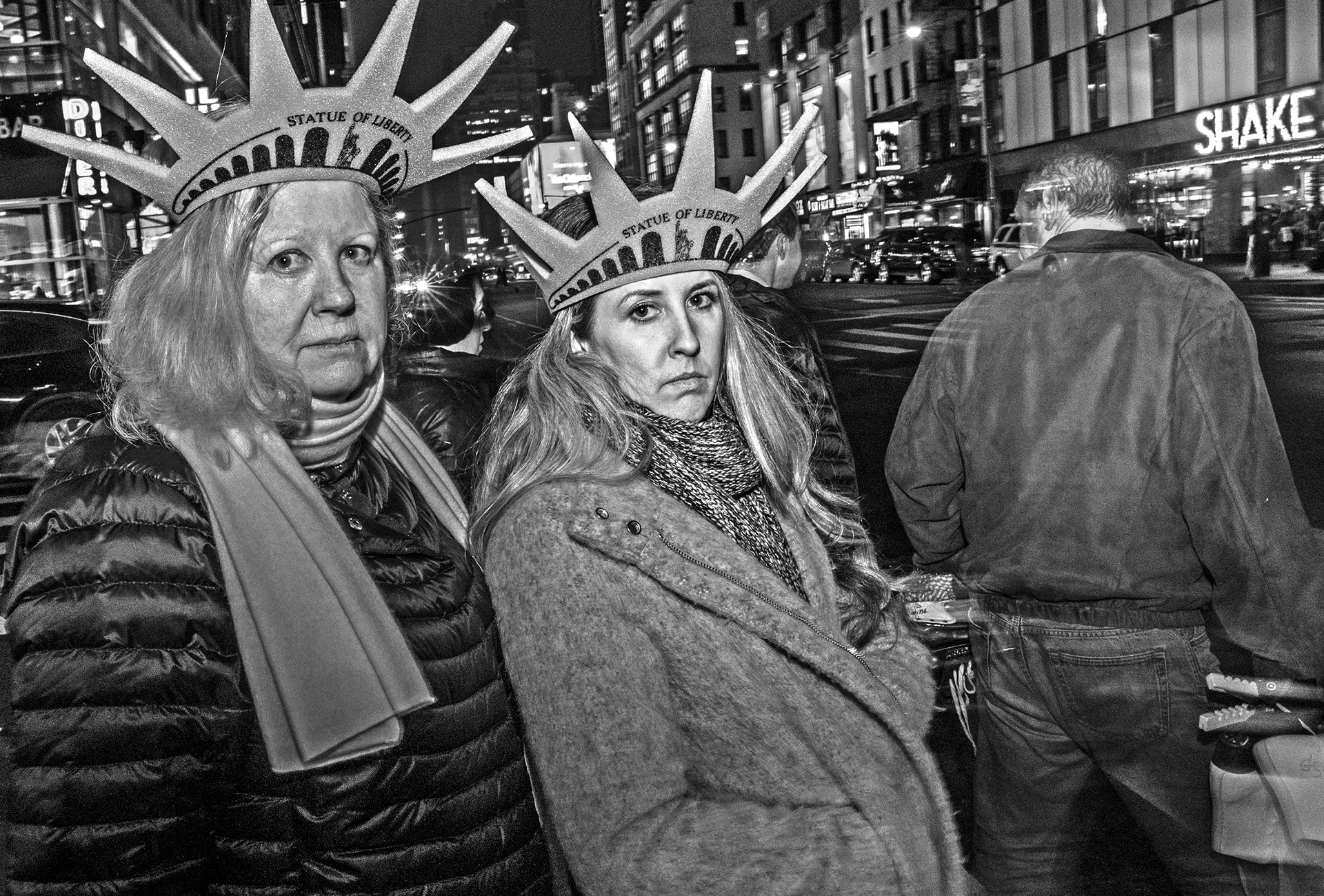
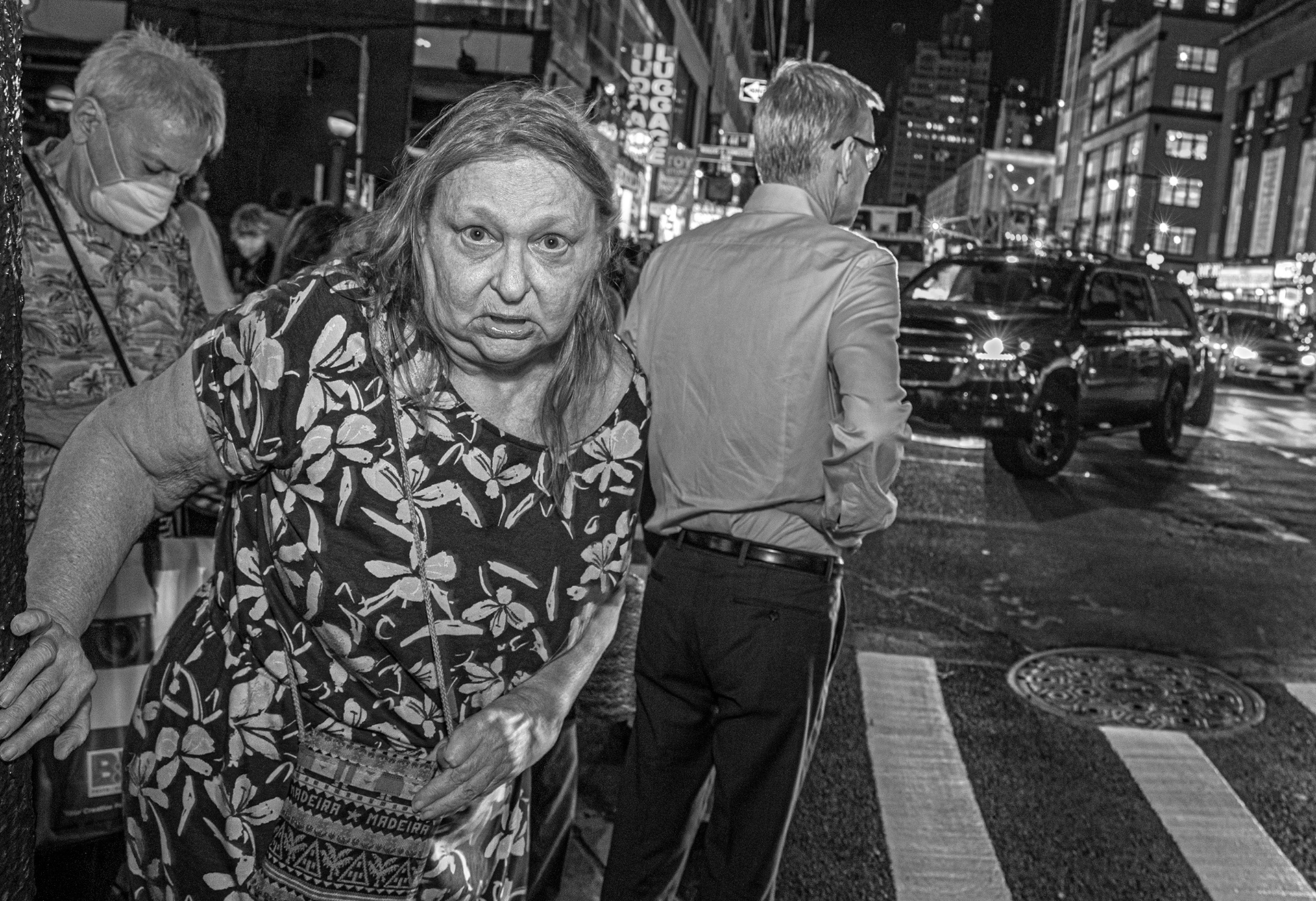
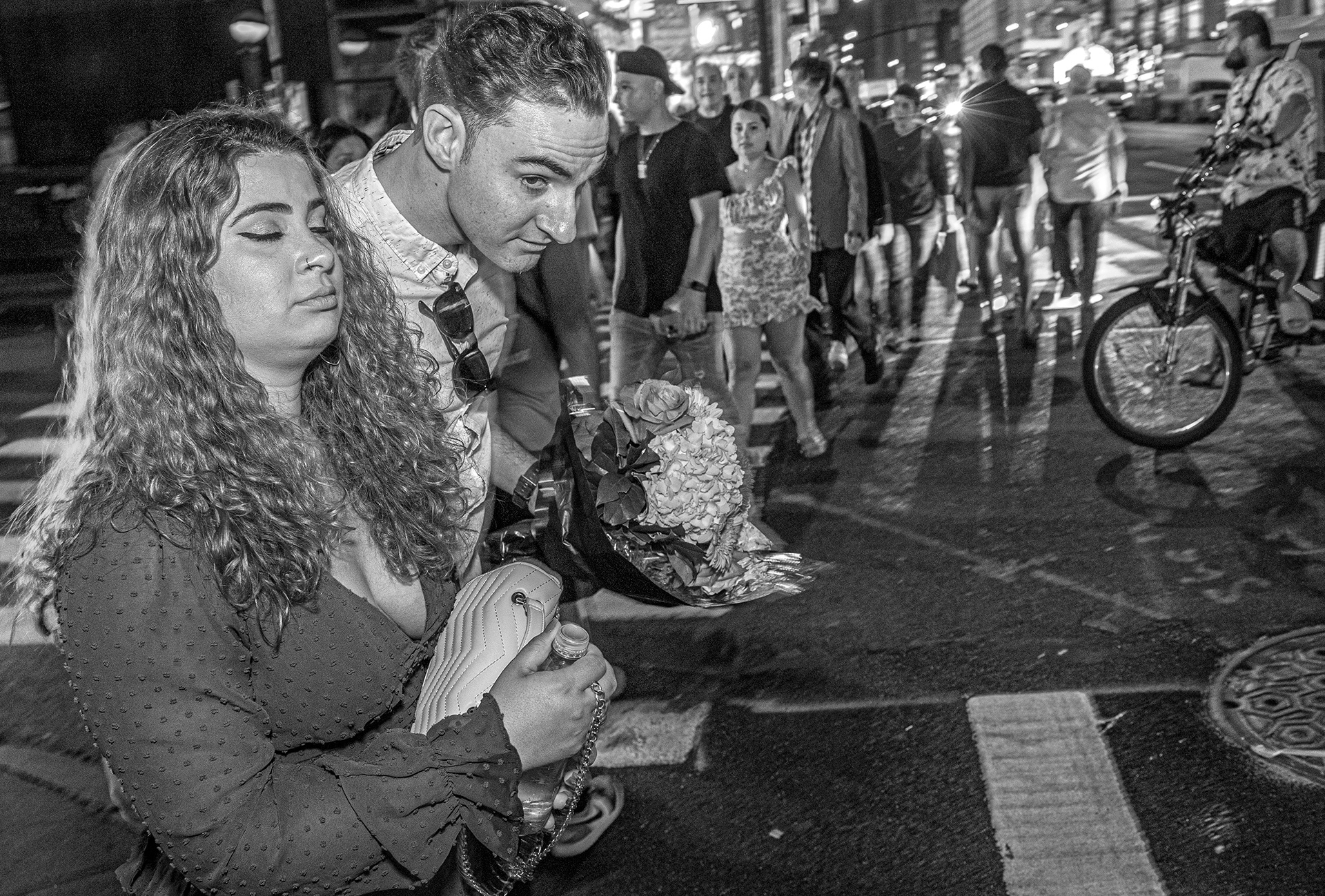
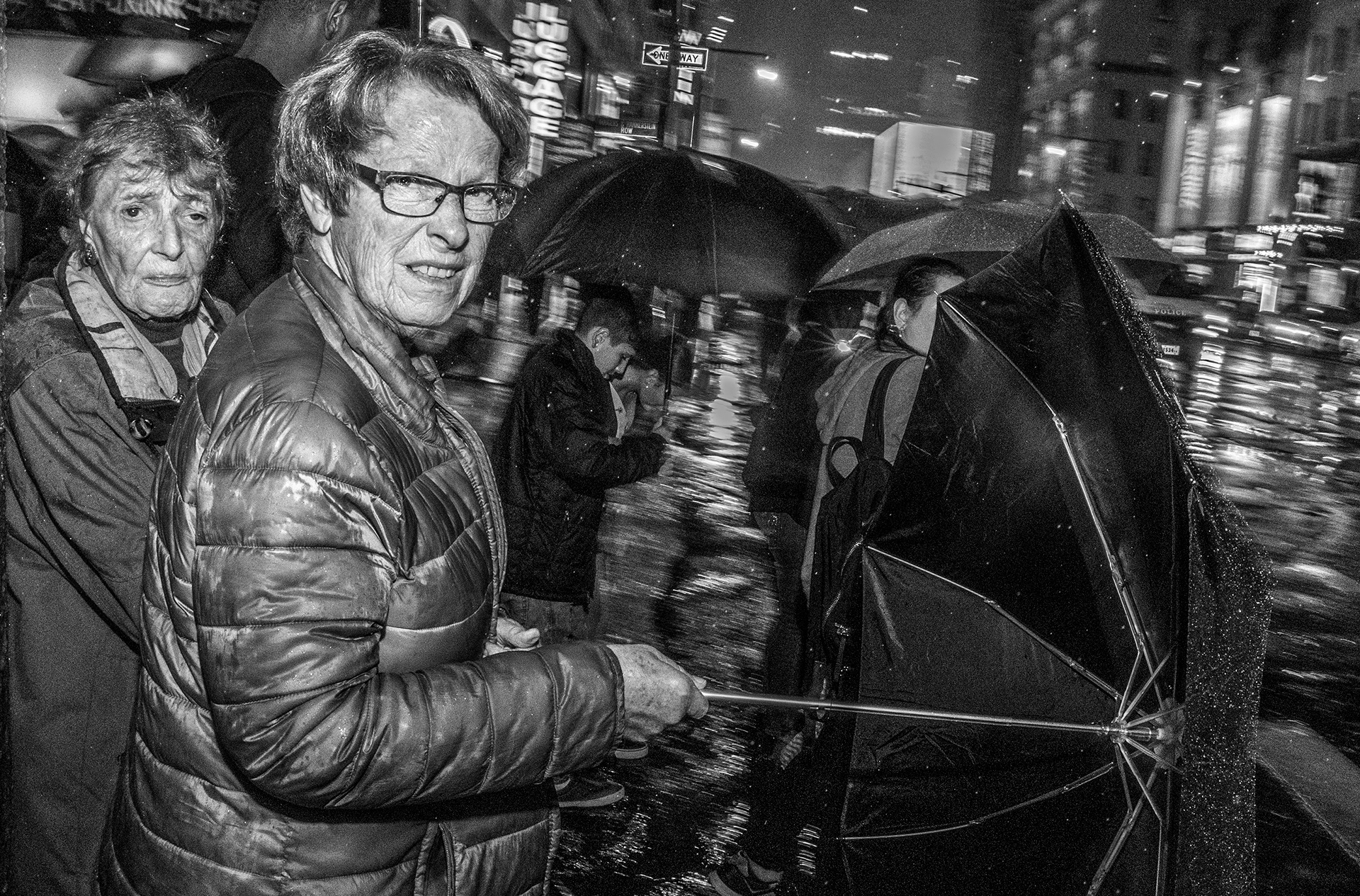
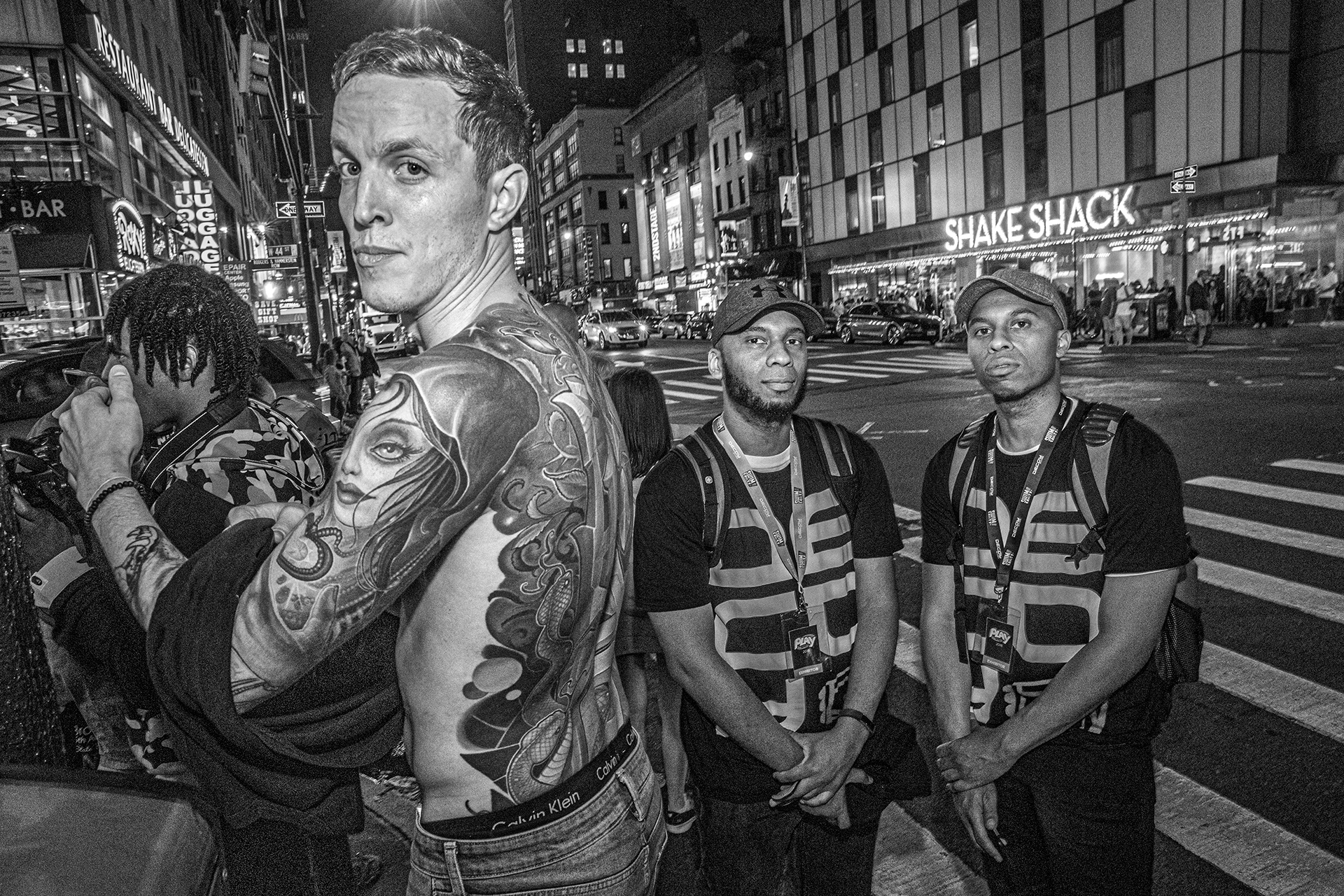
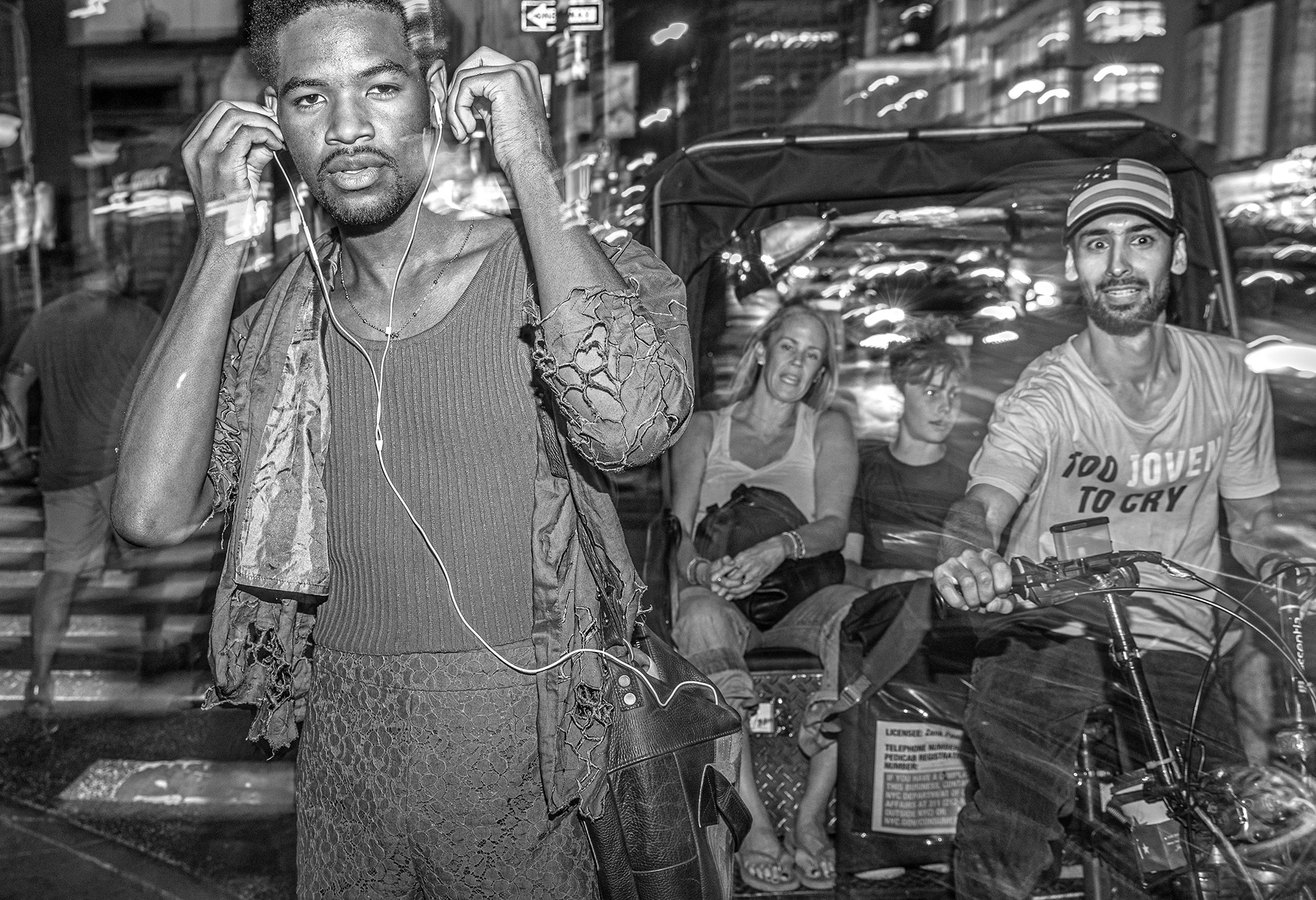
Who’s Taking My Photo? New York, Manhattan. As night falls, neon lights flicker on and crowds surge through the streets. The messy, noisy thoroughfares are packed with people—New Yorkers and out-of-towners, Americans and foreigners, strollers ambling at a leisurely pace and commuters hurrying past in a rush. In April 2014, Professor Hoffman from the New York City College of Visual Arts reached out to me. Years earlier, we had collaborated on the Beyond the Deserted City project, shooting for the Getty Museum in Los Angeles. He asked if I would be interested in joining his team as a photographer for a visual experiment they were about to launch on the streets of Manhattan. According to the professor, his team would select a busy intersection near Times Square, set up a screen at the spot, and place a stage strobe light behind it. During the peak hours of pedestrian traffic—between 8 p.m. and 10 p.m.—the strobe would emit brief bursts of light at people approaching the screen at regular intervals. Photographers stationed in front of the screen would capture close-up shots of the pedestrians’ reactions to the sudden flash. After gaining a thorough understanding of the project’s concept, implementation plan, and objectives, Professor Hoffman and I engaged in extensive discussions about two key concerns: whether the sudden bursts of intense light might disturb passersby, and the issue of the subjects’ right to privacy. Regarding the potential for the unexpected bright flashes to annoy or offend pedestrians, Professor Hoffman explained that the project had initially planned to use a high-power, medium-intensity stage follow spot light. While this light would not cause eye damage, the team opted to replace it with a low-power, low-intensity strobe light out of consideration for the discomfort the brighter beam might cause to people’s senses. In June 2014, with the approval of the Manhattan Borough Maintenance Authority, the team installed the strobe light at the intersection of 7th Avenue and West 42nd Street in Midtown Manhattan for 11 consecutive nights. Between 8:30 p.m. and 10:30 p.m. each night, the strobe flashed for 3 seconds every 5 minutes. Over those 11 days, local patrol officers received zero complaints from pedestrians about discomfort caused by the strobe light. Based on this outcome, Professor Hoffman concluded that intermittent 3-second flashes from a low-power, low-intensity stage strobe light would not disturb pedestrians. He argued that people would simply perceive the light as another quirky entertainment element in the vibrant nightlife of this dazzling metropolis, rather than a visual nuisance. When it came to the right to privacy concerning the street photography subjects, my years of experience in street photography had taught me that in most public areas in the U.S., no one is automatically exempt from being photographed. In other words, if you are walking down the street and notice someone taking your picture, you can turn and walk away, or cover your face to avoid being photographed. However, you have no legal right to demand that the photographer stop shooting or delete the photos—unless the photographer continues to follow and photograph you persistently after you have clearly stated that you do not wish to be photographed, in which case you have the right to ask them to cease or even call the police. When I consulted Attorney Bitz from Professor Hoffman’s team about whether street photography subjects have the right to request photo deletion, his answer aligned perfectly with my understanding. As for the use of the photos in later stages, Attorney Bitz provided a professional explanation: If a photographer has the contact information of the subject whose portrait is included in the photo, they must inform the subject of the intended use of the photo before using it for any purpose, regardless of the nature of that use. The photo may only be used with the subject’s explicit consent. For non-commercial use, the user (including the photographer) is not required to pay the subject. For commercial use, however, the user must negotiate with the subject in advance and pay the agreed-upon compensation for the use of their portrait. If the user uses the photo without having the subject’s contact information, and the subject later comes forward to claim their right to privacy and verifies their identity, the user must immediately enter into negotiations with the subject. These discussions should cover exemption from liability for prior non-commercial use, compensation for commercial use, and whether the photos can continue to be used with the subject’s authorization moving forward. In cases where the subject and user fail to resolve their differences through negotiation, legal action is the final recourse. In the vast majority of street photography cases, photographers do not have the contact information of their subjects. This means that when using the photos, they are unable to notify the subjects in a timely manner. Instead, it is usually up to the subjects to contact the user after discovering that their portrait has been used, and both parties then resolve the privacy issue in accordance with the latter scenario described above. After thorough communication with Professor Hoffman and having all my concerns addressed, I accepted his invitation to join the team. In early April, after several nights of scouting locations, I finally selected the intersection of 8th Avenue and West 44th Street in Midtown Manhattan, near the ROW NYC Hotel, as the shooting site. Located not far from Times Square, this intersection sees a steady flow of pedestrians without the overwhelming congestion of the square itself. It serves as a gateway for people traveling from the west side of Manhattan to Times Square and Broadway—two of New York’s iconic landmarks. From mid-April to late May 2014, I worked with the team to shoot at this intersection for 15 nights, mostly on Fridays and Saturdays when pedestrian traffic was at its peak. We collected 1,786 valid samples, exceeding the 1,500-sample target set by Professor Hoffman. Both Professor Hoffman and I were fascinated by the rich variety of expressions captured in the photos—the reactions of the subjects to the sudden flash were far more diverse than we had anticipated. Professor Hoffman immediately began classifying, organizing, and analyzing the samples. At the end of 2014, he contacted me again, saying he wanted to expand the research scale from the original 1,500 samples to 3,000, and hoped I would collaborate with him again in 2015 to shoot the additional 1,500 samples. I was more than willing to continue working with Professor Hoffman, drawn by my interest in the project, his team’s rigorous work ethic, and the generous compensation offered. Unfortunately, my work schedule for 2015 was already fully booked, leaving me no time to participate in the second phase of the project. After the conclusion of the first phase in 2014, I showed some of the photos to a few media editor friends I knew well. They were extremely interested and expressed a desire to publish the photos in their respective outlets. I promptly asked Professor Hoffman for permission to do so, and he replied that publication was allowed, but only after the project was completed and the research report was released. According to the agreement I had signed with the project, the copyright of the photos belonged to the project’s funder and manager, the New York City College of Visual Arts. As the photographer, I was only permitted to use the images for non-commercial purposes, such as media coverage, non-profit personal photo albums, and exhibitions. Therefore, Professor Hoffman’s restriction on the timing of media publication was entirely reasonable, and as a signatory, I was obligated to comply with it. In mid-2015, when I inquired about the project’s progress, Professor Hoffman told me that the second phase of sample shooting had just been completed, and the research results were expected to be finalized and released by the end of that year. In mid-2016, when I contacted him again to check on the project, he informed me with regret that due to funding issues, the New York City College of Visual Arts had put the project on hold indefinitely. He had no idea when it might resume and apologized for the fact that I was unable to use the photos I had taken. Under the terms of the copyright agreement I had signed with the college—the copyright holder—if the project was permanently shelved, I would never be allowed to use the photos I had shot. Following Professor Hoffman’s suggestion, I contacted Mr. Galiger, the project manager appointed by the college, and asked if the college would be willing to grant photographers partial non-commercial copyright to the photos, given that the project had been suspended indefinitely. Mr. Galiger’s response was a firm “not for the time being.” It was then that I decided to adopt Professor Hoffman’s project concept, return to the same shooting location, and launch a project of my own—this time, working independently instead of relying on a team. I named this project: Who’s Taking My Photo? I set up my camera, equipped with a flash and mounted on a tripod, at the same intersection of 8th Avenue and West 44th Street in Midtown Manhattan. Holding a remote shutter release, I stood about 3 to 4 meters away from the camera, blending into the crowd. Hardly anyone noticed that I was the photographer controlling the device. When pedestrians passing in front of the camera stared at it in confusion, wondering why an unattended camera was positioned on the street, I pressed the remote shutter, capturing their reactions and expressions in the split second they were suddenly flashed by a camera with no visible photographer in sight. I began this project in July 2016 and concluded it in August 2022. No shooting took place in 2019 due to work commitments, nor in 2020 and 2021 due to the COVID-19 pandemic. Leaving a seemingly unattended camera with an automatic flash on a busy street corner was a risky endeavor. After the camera flashed and took their photo, most people would stare at it for a moment, look confused, and then walk away. A small number of people, unable to figure out what was going on, would touch the camera, move it, or even attempt to take it. In such cases, I would reveal my identity and explain my work to them. Most of the time, once they understood what was happening, they would express their understanding. Many even asked me to take more photos of them. A few remained unconvinced, but they would generally mutter a few complaints and then leave. Over the course of several years of shooting, I only encountered two incidents where subjects insisted on having their photos deleted. In July 2017, after a middle-aged woman realized I was the photographer, she demanded that I delete her photo. We argued for nearly half an hour, from 9 p.m. to 9:30 p.m. I repeatedly explained the legal rights of photographers and subjects in public spaces, but the woman refused to accept my explanation and insisted on the photo’s deletion. When negotiations broke down, I called the police. The officers arrived and explained the same legal principles to her that I had already outlined. Once she clearly understood that she had no legal right to force me to delete the photo, she left muttering to herself, still full of doubts. Although the dispute ended in my favor, it wasted half an hour of my prime shooting time. In April 2022, a young rickshaw driver discovered that he had been photographed and approached me, speaking in heavily accented English that was barely understandable, demanding that I delete his photo. Again, when negotiations failed, I called the police. The officers struggled to explain the situation to him, but he seemed to only half-understand, continuing to gesture excitedly to me and the police, insisting that the photo of him must be deleted. After listening carefully to his mix of broken English and hand gestures, the police finally grasped his story. The young driver was from Bosnia. He had told his family and friends back home that he had come to the U.S. to attend university. If his photo were published and his family happened to see it, they would discover that he was working as a rickshaw driver in New York instead of studying—and he would be too ashamed to ever return to Bosnia. In New York, nearly all rickshaw drivers are young Eastern European men who have entered the U.S. through various irregular channels. Lacking legal documentation and basic English skills, they are unable to enroll in school or find stable jobs, making rickshaw driving their primary means of earning a living. Like California, New York is a well-known sanctuary state for undocumented immigrants. The police are aware of their status, but as long as they abide by the law and do not cause trouble, they are generally left alone. After hearing the police relay the driver’s story, I fully understood his reason for demanding the photo’s deletion and immediately erased the image. The driver was deeply grateful and offered to give me a free ride around Times Square on his rickshaw as a token of his thanks. As for the expressions captured in the photos—surprise, confusion, shock, anger, excitement, bewilderment, puzzlement, indifference... They are all there, a bizarre yet authentic tapestry of human reaction. 谁在拍我? 纽约,曼哈顿。 入夜,霓虹泛起人流交织。 凌乱嘈杂的街道挤满了人。纽约人、外地人;美国人、外国人;行色闲散的人、过往匆匆的人。 2014年4月,多年前和我合作在洛杉矶为盖蒂博物馆拍摄过《荒城之外》项目的纽约城市视觉艺术学院霍夫曼教授联系到我,问我有没有兴趣作为摄影师,参加他和他的团队即将在曼哈顿街头进行的一个视觉试验项目。根据霍夫曼教授的介绍,他的团队将在曼哈顿时代广场附近选定一个人流量较大的路口,在路口搭建一个遮挡物,把一盏舞台频闪灯放置在遮挡物后。在夜间8点到10点人流密集度最高的时间段,频闪灯定时向靠近遮挡物的人群短暂释放光束,站在遮挡物前的摄影师近距离拍摄被光束照射的行人,记录下行人被瞬间光线照射的反应。 详细了解了项目设计构想、具体实施方案和想要达到的目的后,我和霍夫曼教授就用强光瞬间去照射行人会不会有扰民之嫌、以及被摄者肖像权等问题反复进行了讨论。 关于被强光突然照射的行人会不会觉得被骚扰、被冒犯的问题,霍夫曼教授说原本项目设计的光源是大功率中等强度的舞台追光,追光不会对人的视觉造成伤害,但考虑到大功率追光的亮度可能会对行人的感官造成不适,团队把大功率中等强度的舞台追光灯换成了小功率低强度的舞台频闪灯。2014年6月,团队征得曼哈顿市政维管局的同意后,连续11个晚上把频闪灯放置在曼哈顿中城第7大道和西42街交汇的路口处,每晚8点半到10点半之间,频闪灯每过5分钟,向过往的行人频闪3秒。11天过去,片区当值巡警没有接到一起行人对频闪灯发出的频闪光感到不适的投诉。正是基于这个结果,霍夫曼教授得出小功率低强度的舞台频闪灯间歇性向行人频闪不超过3秒钟,不会引起行人不适的结论。他认为,人们只会把这个身边的发光物当作是这个光怪陆离的超级大都市夜生活中的一个娱乐元素,而非视觉干扰源。 就这个项目所涉及到的被摄者肖像权而言,以我多年街拍经历所积累的认知来看,在大多数的公共区域内(这里仅指美国),没有人能自动获得被拍摄的豁免权,也就是说,你走在大街上,当你发现有人在拍你,你可以转身走开,远离正在拍你的人,也可以用手挡住你的脸让拍你的人没法拍到你。但你没有权利要求拍你的人放下相机不准拍你,也没有权利要求摄影师删除你的照片,除非有在你已经告诉拍摄影师你不愿意被拍的情况下,摄影师仍然不顾你的感受长时间追着你拍,此时,你有权利要求摄影师停止拍摄或者干脆选择直接报警。当我问到霍夫曼教授团队里的比特茨律师关于街头摄影被摄者有没有权利要求摄影师删图时,比特茨律师的回答和我对此的认知完全一致。 至于后期图片使用阶段的肖像权问题,比特茨律师给出的专业解释是,作为摄影师,当你知道你的照片里肖像权人(被摄者)的联系方式时,不管你把涉及到肖像权人的照片用于任何用途,你都应该事先把照片的用途告知肖像权人,在肖像权人对照片使用无异议的情况,照片使用方(包括摄影师)才可以使用照片。如果照片作为非商业用途使用,照片使用方可不支付报酬给肖像权人,如果照片作为商业用途使用,照片使用方应和肖像权人事先商定并按约定向肖像权人支付肖像权使用报酬。 如果照片使用方在不知道照片中肖像权人联系方式的情况使用了照片,一旦有人向图片使用方(包括摄影师本人)提出肖像权主张并经核实身份确认无误后,图片使用方应立即和肖像权人进行协商,就前期图片非商业使用的免责和商业使用的补偿,后续图片是否能在肖像权人授权后继续使用等问题达成共识。鉴于有些案例所涉及到的情况复杂,在肖像权人和图片使用方经过协商,仍不能就分歧达成共识的,通过法律诉讼来解决问题是最终的办法。 在绝大多数情况下,街拍照片摄影师是不知道照片中肖像权人的联系方式的,也就是说摄影师在使用图片的时候,无法及时通知到肖像权人,只能是肖像权人发现自己的肖像被使用后找到图片使用方,双方按照以上谈到的后一种情形协商解决肖像权问题。 经过和霍夫曼教授的反复沟通,相关疑虑得到解答后,我接受了教授的邀请,加入教授的团队开始工作。4月初,通过几个晚上的踩点观察,我最终选定曼哈顿中城第8大道和西44街交汇处靠近ROW NYC 酒店的路口作为拍摄地点。第8大道和西44街交叉路口离时代广场不远,人流交织但又不像时代广场那样密集得让人踹不过气来。从曼哈顿西边经由这个路口进出这时代广场和百老汇这两个纽约核心地标的人鱼贯流进流出。 2014年4月中旬到5月底,我和团队成员在这个路口前后拍了15个晚上(多数是周五、周六这两个人流量相对比较大的周末之夜),收集到1786个有效样本(霍夫曼教授要求的样本数量为1500个)。我和霍夫曼教授都对样本照片呈现出来的人对瞬间光线丰富的表情感到非常有趣,有些被摄者的表情和行为是我们事先没有想到的,霍夫曼教授随即展开对样本的分类、整理、研究。2014年年底,霍夫曼教授再次联系到我,说他想把之前既定的1500个样本研究规模扩大到3000个,希望我在2015年再和他合作,完成另外1500样本的拍摄。鉴于我对这个项目的兴趣,以及霍夫曼教授及其团队严谨的工作态度,加上项目支付给我的可观酬劳,我本人是非常愿意继续为霍夫曼教授工作的,不巧的是我2015年全年工作计划已经排满,实在没办法再抽出时间,所以我没有参与这个项目的第二阶段拍摄。 2014年项目第一阶段工作结束后,我给几个和我熟悉的媒体编辑朋友看了一些照片,他们对照片非常感兴趣,希望可以在他们的媒体上发表。我随即向霍夫曼教授询问可否在媒体上发表这些照片,霍夫曼教授答复可以发表,但要等到他的项目完成,形成项目研究报告后。根据我和项目签订的协议,照片的著作权归这个项目的出资方和管理方纽约城市视觉艺术学院所有,摄影师仅可把图片用于诸如媒体报道、非赢利性的个人画册、展览等非商业用途使用。所以霍夫曼教授关于摄影师什么时候可以在媒体上开始发表这些照片的时间限制是没有问题的,我作为签约人也是应该严格遵守的。 2015年年中,我询问项目进展时,霍夫曼教授给我说第二阶段的样本拍摄工作刚刚完成,研究结果可能会在当年年底完成并公布。2016年年中,当我再次联系到霍夫曼教授询问项目进展情况时,霍夫曼教授告诉我,因为经费问题,纽约城市视觉艺术学院搁置了这个项目,他不知道项目什么时候能重启,他本人对此非常遗憾,对我迟迟不能使用照片表示抱歉。 按照我和著作权方纽约城市视觉艺术学院签订的协议中有关照片著作权方面的约定,如果项目被永久搁置,我就永远不能使用这些我拍的照片。 我按照霍夫曼教授的建议,联系到学院方指派的项目管理人加里格尔先生,询问如果学院无限期暂停项目研究的话,可不可以向摄影师释放部分照片非商业使用的著作权,加里格尔先生的答复是暂时不能。 由此,我决定沿用霍夫曼教授的项目理念,在同样的拍摄地点,改变以前必须靠团队支撑的拍摄方式,按照我自己的方式,开始拍摄我自己的项目。 这个项目的名称叫: “谁在拍我?”…… 我把固定在三脚架上带闪光灯的相机仍然摆在曼哈顿中城第八大道和西四十四街交汇处的路口,我手持遥控快门站在离相机大约三四米远的地方,混在过往的人群中,几乎没有人能察觉到我是操控这台相机的摄影师。当走到相机前的人疑惑地盯着这台看似无人看管的相机时,我按动遥控快门,拍下路人突然被一台无人操作的照相机闪拍、却不知道摄影师在哪里的各种反应和表情。 我是从2016年7月开始这个项目的,2022年8月结束,此期间2019年因为工作安排、2020年和2021年受新冠疫情影响没有拍摄。 把看似没人看管的相机架在脚架上放在人来人往的街头是件冒险的事儿。发现相机在自动闪光拍照后,多数人会盯着照相机看一会儿,疑惑一阵后离开。少数人在疑惑得不到解答的情况下触摸、移动、或者试图拿走照相机。这个时候,我会亮明自己的身份,把我的工作告诉给他们,多数时候,搞清楚是怎么回事儿的人会表达理解,很多人甚至要求再给他们拍几张,也有人不理解,但基本都会嘴里唠叨几句不满后离开。 在前前后后几年的拍摄过程中,我只遇到过两起被摄者坚决要求删图的事情。2017年7月,一个被拍的中年妇女发现我是摄影师后,要求我把她的照片删掉,从晚九点到九点半接近半个小时的争执之中,我反复向她解释法律规定的公共区域中摄影师和被摄者的权利,中年妇女不同意我的解释,无论我怎样解释,依然坚决要求删图。协商未果打电话叫来警察,警察以执法者的身份向她解释了我之前向她已经解释过的情况,在明确得知不能强行要求我删图后,中年妇女絮絮叨叨、满腹疑虑地离开,争执以有利于我的结果结束,却浪费了我半个小时黄金拍摄时间。2022年4月,一个蹬人力三轮车的年轻车夫发现自己被拍后找到我,用极难听懂的英语要求我把他的照片删掉。同样协商不成后只能叫来警察,警察费劲解释半天车夫似乎依然似懂非懂,继续和我跟警察语言加手势激动地比划着,意思是必须把有他在里面的照片删掉。警察仔细听了一阵车夫口语加手语的表述后似乎听懂了他的意思,年轻的车夫说他来自波斯尼亚,他给家里人和朋友他说来美国是来上大学的,如果我的照片发表后不巧被他的家人看到,知道了他在纽约做人力车车夫而不是在读书,他就没脸再回波斯尼亚了。在纽约,蹬人力车的几乎全是通过各种非正常途径进入美国的东欧年轻人,由于没有合法身份和加上基本不会说英语,这些年轻人不能进入学校学习,也无法找到一份稳定的工作,蹬人力车成为了他们挣钱糊口的主要方式。和加州一样,纽约是美国著名的无证件移民庇护州,警察知道他们是没合法身份的移民,但只要遵纪守法不胡作非为,通常也不会管他们。听过警察向我转述的年轻车夫的情况后,我完全理解了他要求删图的心情,立即删除了他的照片,车夫甚是感激,要我坐到他的三轮车上,免费拉我在时代广场附近兜一圈,以表示对我的感谢。 至于拍到的这些表情,惊奇、疑惑、诧异、愤怒、兴奋、茫然、搞不懂、无所谓……。 各种各样,怪异而真实。